Why is my flat roof ponding water after storms?
A flat roof is never truly flat, it is built with a slight slope toward drains and scuppers. When water stands on it well after a Gardena storm has ended, something in that drainage chain has failed.
What ponding is, and why it matters
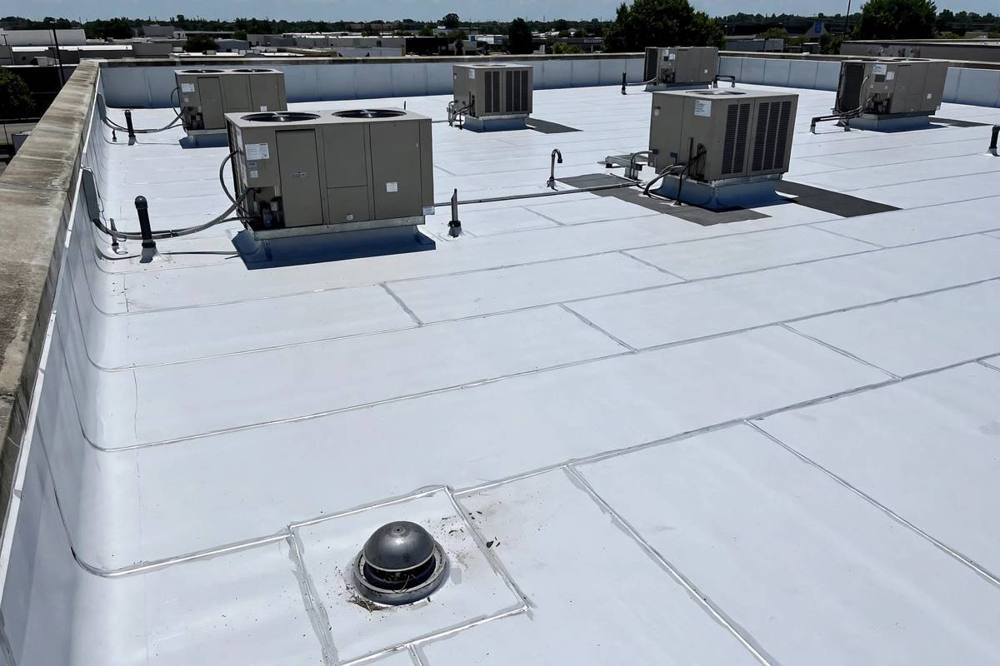
Ponding is water that remains standing on a flat or low-slope roof after rain has stopped and the roof has had time to drain. A small puddle that dries within a day of a storm is a different matter from water that is still there days later, sitting over seams and around drains. Standing water adds weight, accelerates membrane ageing under UV and heat, and finds any weak seam or flashing it sits over.
Gardena's rain pattern makes ponding a winter problem. Rain arrives in concentrated bursts from November through March, so a flat roof can go months without a real drainage test, then take a large volume in a single storm. The main Gardena-specific point is drainage and ponding on low-slope roofs during winter bursts, stated qualitatively.
The usual causes in Gardena
Blocked drains, scuppers, and gutters
The most common cause, and the cheapest to fix, is debris. Leaves, tree debris from park-adjacent streets, and sediment collect at drains, scuppers, and gutter outlets, and water backs up behind the blockage. A flat roof that ponds only near one drain usually has a blocked drain, not a failed membrane.
Lost slope and settled decking
Flat roofs rely on a slight slope, often built with tapered insulation or a sloped deck. If decking has sagged, insulation has compressed, or a previous repair levelled an area that used to drain, water collects in the low spot. This kind of ponding appears in the same place after every storm and does not move when drains are cleared.
Failed membrane seams
TPO, PVC, EPDM, modified bitumen, and built-up membranes all join in seams, and seams are where ponding does its damage. Standing water sits on a seam, works into any weak weld or lap, and eventually leaks below. A seam leak often shows inside as a stain far from the pond itself, because water travels under the membrane before it finds a way down.
Parapet and flashing problems
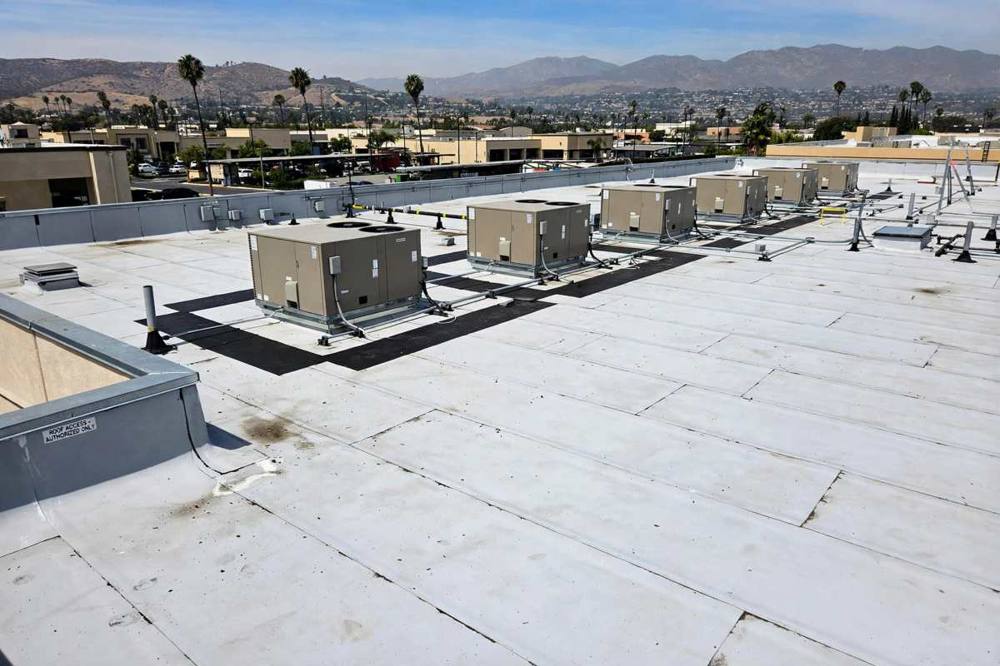
On commercial and duplex roofs, parapet walls, rooftop-unit curbs, and scupper flashings are joints in the waterproofing. If a scupper flashing has cracked or a parapet cap has opened, water can enter at the edge even when the field of the membrane is sound.
Residential flat and commercial flat are different jobs
Residential flat roofs in Gardena are usually smaller: additions, patio covers, garage roofs, and the flat sections of duplex and fourplex buildings. Their drainage is often a single scupper or a short gutter run, and a blockage there ponds the whole section quickly.
Commercial flat roofs, warehouses along the northern industrial belt, retail centres on Redondo Beach Boulevard, and shop buildings on the arterial corridors, are larger, with multiple drains, internal drainage runs, and rooftop equipment. Ponding on a large commercial roof is a phased job: drains and slope first, membrane and seams second, and tenant coordination throughout. Our flat roofing page covers the residential and commercial membrane systems, and commercial roofing covers the larger-building scope, including phased work over operating premises.
What to do about ponding
- Clear the drains first. Remove debris from drains, scuppers, and gutter outlets, and check that downspouts run clear. If the pond drains, the cause was blockage, and a maintenance routine is the fix.
- Mark where water stands. After the next storm, note exactly where water remains and for how long. A pond that stays in the same place points to slope or decking; a pond that moves with debris points to drainage.
- Do not walk a ponded roof to investigate. Standing water hides soft decking, seams, and drains. A ponded roof is a roofer's inspection, not a homeowner walk.
- Get seams and flashings checked. If ponding has persisted, the membrane seams and scupper flashings under the standing water need inspection even if nothing is leaking inside yet. A roof inspection documents the membrane, seams, drains, and slope together.
Fixes range from drain and scupper work, through roof coating or membrane repair where the membrane itself is sound, to re-sloping or replacement where the deck has settled. The same diagnosis applies to flat roofs in North Gardena, where the industrial-residential seam puts warehouse and house flat roofs within a block of each other, and to park-facing flat sections around Rowley Park, where tree debris loads drains faster. The right fix follows the cause, and the cause is only visible on the roof. Roof maintenance that includes regular drain clearing is what keeps a small ponding problem from becoming a seam failure, and it is cheaper than either.
Get help with a ponding flat roof in Gardena
If water is still standing on your flat roof well after a storm, or if it is leaking inside, call Nexo Xpert Roofing at +1 (562) 600-4041 to discuss an inspection and an estimate. Ponding is diagnosed from the roof surface and the drains, not from the ground.
Common questions
Is ponding water on a flat roof normal?
A flat roof is built to drain, not to hold water. A puddle that dries soon after a storm is not the same as water still standing well after the storm has ended; persistent standing water is a drainage or slope problem, not a design feature.
What causes flat roof ponding in Gardena?
Most often blocked drains or scuppers, lost slope from settled or compressed decking, or a previous repair that levelled a draining area. Gardena's concentrated winter bursts test drainage all at once, so a blockage that went unnoticed in the dry summer shows up in the first winter storm.
Can ponding water damage my roof?
Yes. Standing water adds weight, accelerates membrane ageing, and sits over seams and flashings until it finds a weak point. A seam under standing water is far more likely to leak than the same seam on a draining roof.
Do I need a new roof if my flat roof ponds?
Not necessarily. If clearing drains solves it, maintenance is the answer. If the deck has settled or the membrane seams have failed under standing water, repair or replacement follows from what the inspection finds, not from the pond alone.
Sources and checks
Sources and checks: CSLB Check a License (California Contractors State License Board, C-39 roofing classification); City of Gardena Building and Safety Division, 1700 W 162nd St (re-roof permits, CF1R forms, valuation-based fees under the 1 July 2026 schedule); CAL FIRE/OSFM Fire Hazard Severity Zone Viewer (parcel fire-zone check). No licence number, firm price, or warranty term is claimed on this site.