Phone-only contact
Call +1 (562) 600-4041 to discuss an estimate.
Call +1 (562) 600-4041 to discuss an estimate.
Call +1 (562) 600-4041 to discuss an estimate.
Review the approach before deciding.
Equipped vehicles and respectful cleanup.
A Gardena contractor serving Gardena homes.
Installation starts with whether the roof, the opening and the flashing can all be done soundly — not with the skylight model.
Roof type, slope, deck condition and the proposed opening's position are assessed, including whether the location suits a skylight at all.
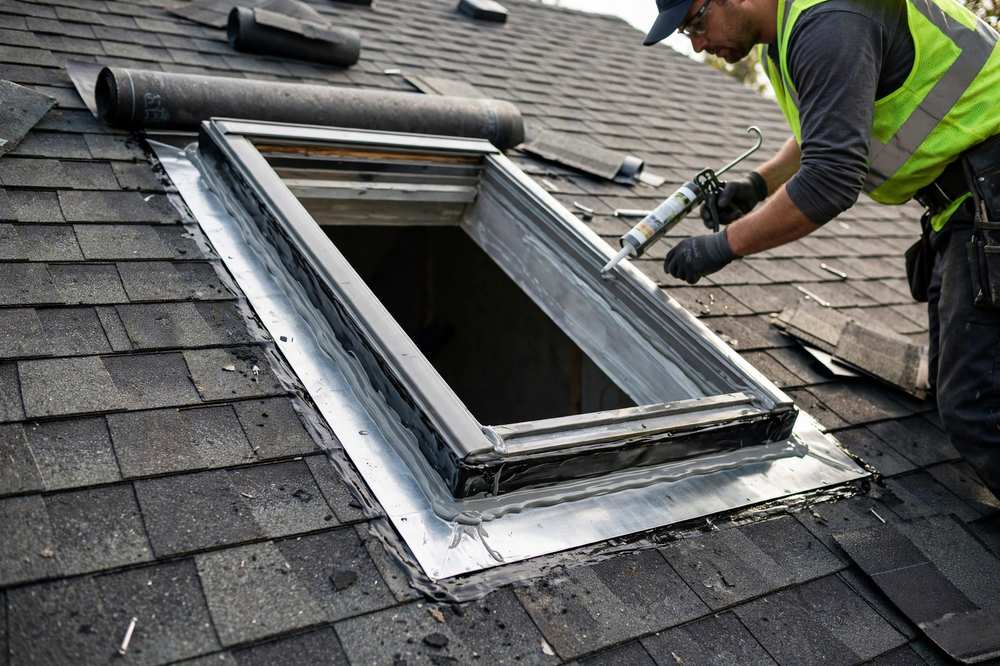
Curb height, head, side and sill flashing, and drainage order are planned before cutting, because the curb is where skylight leaks start.
Before a new opening is cut, the rafters and framing are checked so the skylight is supported correctly.
Underlayment, flashing laps and surrounding covering are detailed so water sheds over every layer toward the gutter.
Where a reroof is planned, skylight installation is coordinated with it, so flashing is built into the new roof rather than patched into an old one.
Share what is happening and receive a clear next step from the local team.
Skylight installation in Gardena is the creation of a new roof penetration — a curb, a flashing assembly and a glazed unit — that must admit daylight without admitting winter rain, and whose framing implications are checked rather than assumed.
The Gardena case for care is straightforward: a skylight sits in the rain path, and winter bursts test every lap and joint at once, while summer sun tests seals and glazing. The most common installation failure is not the skylight itself but the curb flashing around it — head flashing that traps water, side flashing lapped the wrong way, or a sill that ponds. That is why this page scopes flashing before glazing, and why structural work is handled with a qualification: cutting or altering framing is a separate scope question, and a skylight is not promised on a roof where that scope has not been checked.
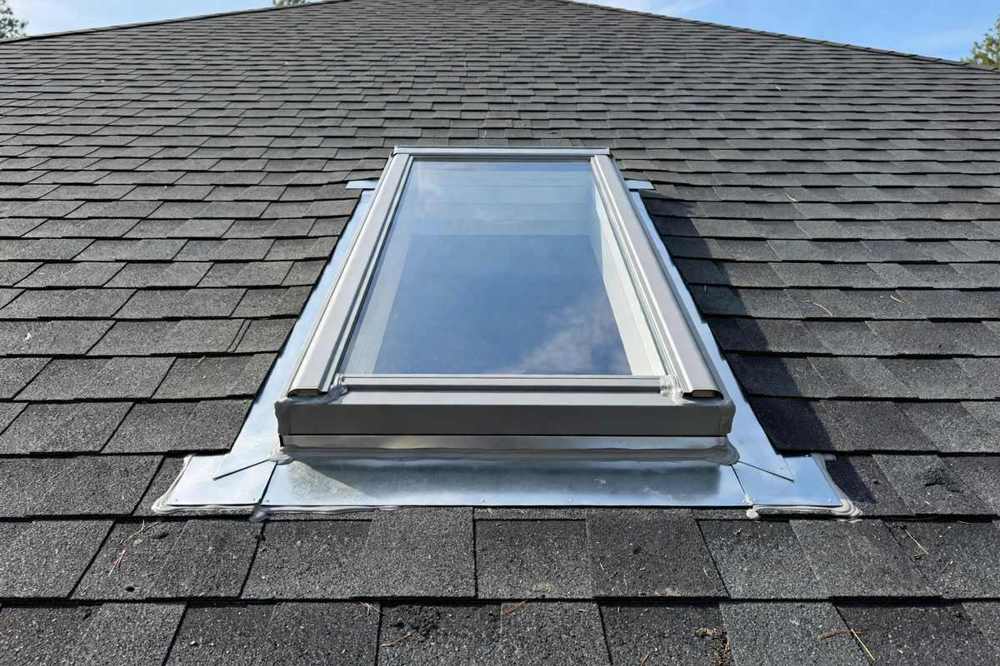
The proposed location is assessed for slope, drainage, deck condition and distance from valleys and junctions.
You get a written scope that names the flashing work and, separately, any structural or framing work required — with its responsible scope identified before cutting.
The curb is built to height, flashing is installed in drainage order, and underlayment is lapped over and under in sequence.
The skylight unit is set into the flashed curb and surrounding covering is reseated, so water sheds over every layer.
The finished penetration is walked through layer by layer, with watch points for the first heavy rain named.
A curb built to height gives flashing room to work; a low or uneven curb traps water at the sill.
Head, side and sill flashing lapped so each layer sheds onto the next, toward the gutter.
Underlayment is sequenced with flashing, not laid over it in a way that traps water behind the curb.
Deck condition and framing implications are checked before cutting, not discovered mid-installation.
Surrounding shingles, tile or membrane are reseated around the curb so the penetration reads as part of the roof.
You are told exactly where to look after the first heavy rain, and what a problem would look like.
A skylight is assessed first for roof suitability — slope, drainage and deck — before any unit is discussed.
Coordinating skylight installation with a reroof builds flashing into the new roof assembly.
An existing opening still needs its curb flashing assessed; a new unit in old, failed flashing inherits the old leak.
Valley-adjacent openings concentrate water at the curb; position is reconsidered or flashing is detailed for that load.
Gardena is an incorporated Los Angeles County South Bay city (incorporated 11 September 1930, 5.86 sq mi, 2020 population 61,027), in Climate Zone 8, with a median home built year of 1964 and the largest building decade 1950–59. Rain here is concentrated in winter (about 13–14 inches a year, November–March, near-zero June–September), with Santa Ana wind season and strong summer sun and heat ageing roofs. Design criteria from City of Gardena form BLD-020 (rev. 12/2/25) are 100 mph wind, Exposure C, Seismic Design Category D. Permits for re-roofs go through the City of Gardena Building & Safety Division, City Hall Room 101, 1700 W 162nd St — not LADBS. Gardena permit fees are valuation-based under the 1 July 2026 schedule; there is no flat residential reroof fee, and CF1R forms are required for a reroof permit. For skylights, Gardena's winter bursts are the design load: a penetration that survives a dry summer can leak at the first concentrated storm if its curb flashing is lapped wrong, and the 1950s–70s tract roofs most often considered for skylights may need framing questions answered before cutting begins.
Related reading: Why is my roof leaking after heavy rain in Gardena?.
Founding-stock homes where deck age and framing questions deserve checking before any opening is cut.
1960s tracts where room layouts and roof planes make skylight position a genuine design choice, not a default.
Mixed frontage where flat and low-slope sections change the curb and flashing approach entirely.
Concentrated rain tests curb flashing at once; drainage-order laps are the defence.
Long dry summers age seals and glazing; installation quality at the curb matters more than the unit's looks.
A skylight built into a reroof outlasts one patched into an ageing roof.
A dark room on a sound pitched roof was assessed for a new skylight, with slope and drainage both favourable.
A curb was built and flashed in drainage order, the unit set, and covering reseated; the room gained daylight without a rain-path compromise.
Maintenance: Watch the curb's head and sill after the first heavy rain, and keep debris from damming above it.
A homeowner planning a reroof also wanted daylight in a hallway.
Skylight flashing was built into the new roof assembly, rather than cut into the old roof first and re-flashed later.
Maintenance: Coordinate skylights with reroofs wherever the timing allows.
A proposed opening required framing changes that had not been scoped.
The framing scope was named and checked separately before any cutting was promised, so the skylight was not sold on an unexamined structure.
Maintenance: Never promise a skylight before its framing scope is checked.
Installation problems are usually flashing or framing problems discovered too late — after the hole is cut, not before.
Head or side flashing that traps water instead of shedding it leaks at the first winter burst, regardless of the unit's quality.
A curb without height ponds water at the sill and defeats even well-lapped flashing.
Cutting framing without a scope check creates structural questions no flashing can answer afterwards.
An opening too close to a valley concentrates water at the curb beyond what standard flashing handles.
The expertise here is sequencing: assess the roof, check the framing scope, build the curb and flashing — and only then set the unit. Reversing that order is how skylights leak.
Paraphrased summaries of five 5-star Google reviews; the other 37 reviews are counted in the 4.9-star, 42-review aggregate only.
Full roof replacement plus seamless gutters; praised a detailed consultation, the company's own trained crew rather than subcontractors, daily project-manager presence, daily cleanup, and passing inspection.
First full roof replacement and new gutters; praised step-by-step explanation and patience with insurance and financing questions, and clear communication.
Full roof replacement, gutters, gutter guard, and siding work in the reviewer's own account; praised colour renderings, scheduling, organisation, and communication, and options suited to Gardena sun and seasonal rain.
Leak leading to full replacement; praised a fast estimate and inspection, fair repair-versus-replacement advice, a 2-day install, and rooftop photos.
Reroof after poor workmanship and leaks on a new-home build; praised a thorough explanation, insurance-claim help, careful work on a steep roof with a special panel system, and cleanup.
No. Slope, drainage, deck condition, valley proximity and framing all affect suitability, and each proposed opening is assessed before installation is promised.
Not assumed.
Most often at the curb flashing, not the glazing: laps in the wrong order, a low curb, or a valley-adjacent position that concentrates water.
Where timing allows, yes: flashing built into a new roof assembly is more durable than flashing patched into an ageing one.
Not seeing your question? Our local team can help you understand urgency, scheduling and what to expect.
Ask the local teamWhen an existing skylight leaks, diagnosis separates flashing, seal and glazing failures.
View service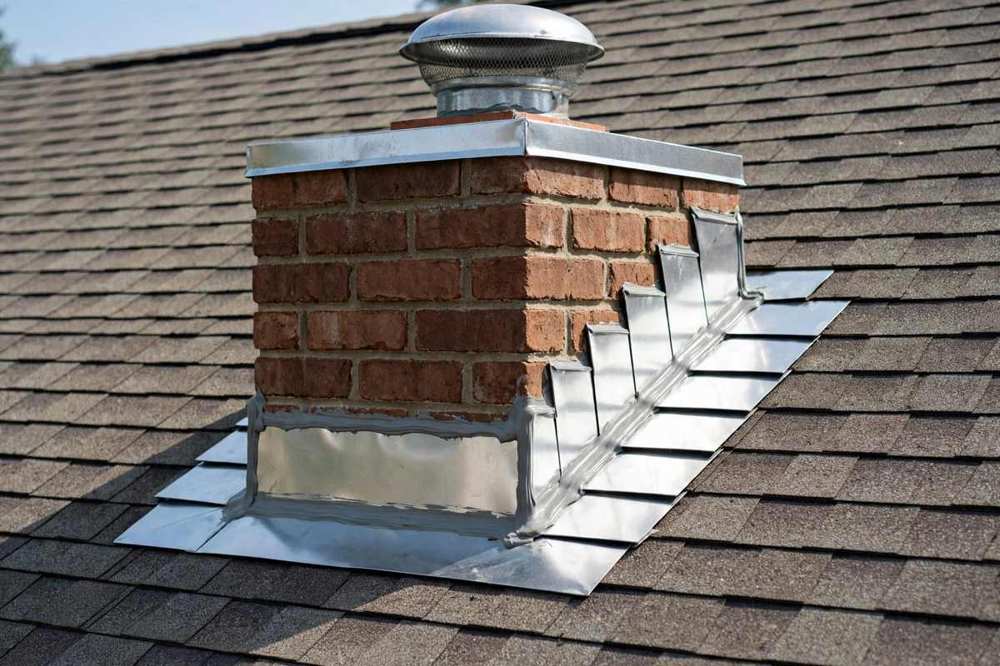
Curb flashing is flashing work — the same drainage-order discipline as valleys and chimneys.
View service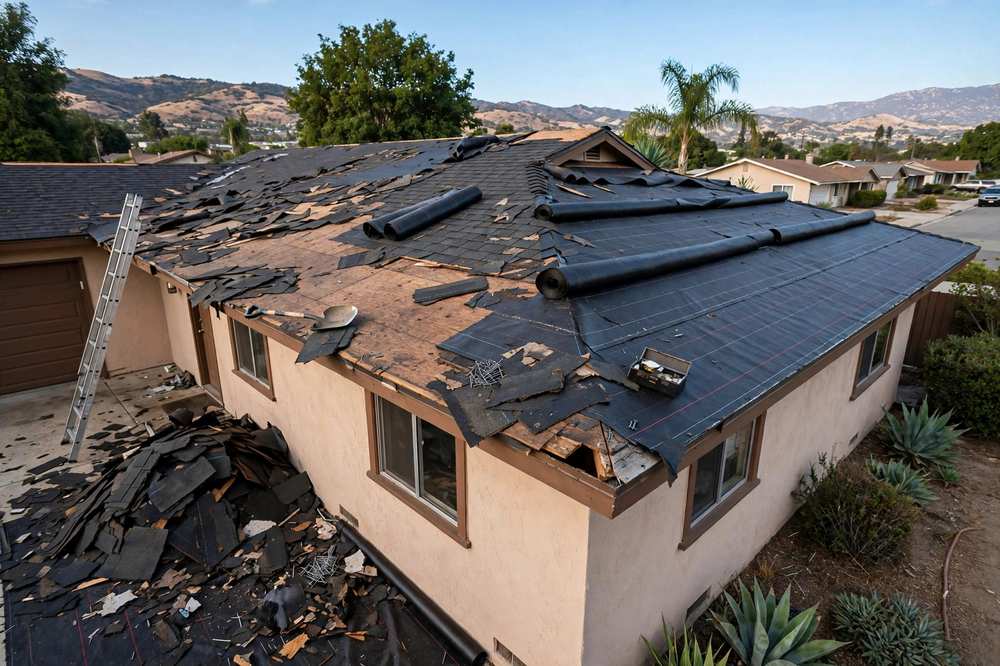
Reroof timing lets a skylight be built into the new assembly.
View service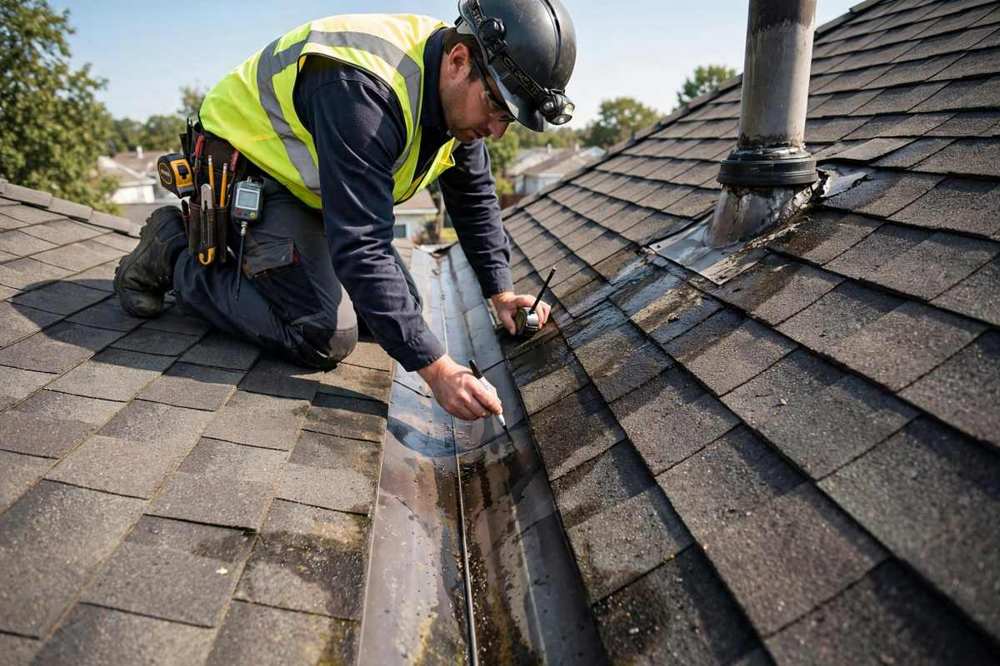
A skylight-area leak is traced to curb, seal or glazing before any scope is sold.
View serviceCall us at +1 (562) 600-4041 to discuss an estimate. Our phones are open 24 hours every day. Tell us what the roof is doing and we will tell you what it needs.