Gardena-based team
Based at 1247 W 130th St, Gardena, and open 24 hours every day.
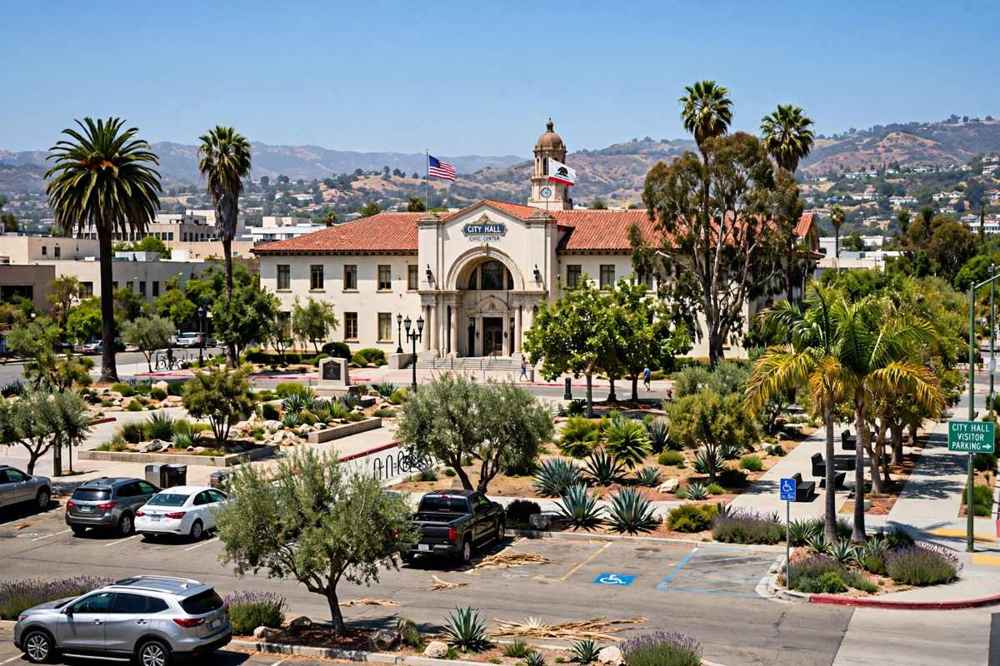
EXPLICIT OVERLAP NOTE: this page is not a separate neighbourhood. It covers the same ground as the Gardena Boulevard corridor page, from the civic side: the 162nd Street cluster of public buildings and the houses around them.
Based at 1247 W 130th St, Gardena, and open 24 hours every day.
Review the approach and call for an estimate before deciding.
What is found on the roof is shown, not just described.
Follow-through from first call to final walkthrough.
The cluster is City Hall at 1700 W. 162nd St, the police station at 1718 W. 162nd, the Nakaoka Community Center at 1670 W. 162nd, Rush Gymnasium and Human Services at 1651 W. 162nd, Primm Pool at 1650 W. 162nd, and Fire Station 158 at 1650 W. 162nd. That concentration of public buildings is the page's subject — and the reason it overlaps the downtown corridor page, which this page says plainly rather than pretending the two are different neighbourhoods.
Services here split two ways: institutional flat-roof scope for the civic buildings, and house scope for the mid-1950s streets around them.
New roof installation starts with the deck, underlayment, flashing and ventilation, then the covering itself. Institutional installation is phased around public programming, with drains and large-span detailing planned before any covering goes down.
View service →02A full replacement removes the old covering down to the deck, so hidden deck damage and old layer build-up can be dealt with rather than covered over. A civic-building replacement is a phased programme over occupied public space, not a two-day house job; the houses nearby get the ordinary house sequence.
View service →03Targeted repair makes sense when the failure is local — one flashing, one seam, one penetration — and the surrounding covering still has life in it. Repairs on a gym or pool roof start at drains and ponding, while repairs on the surrounding houses start at flashing and valleys.
View service →04An inspection photographs the covering, flashing, penetrations and drainage, and separates what needs attention now from what can wait. An inspection here separates the institutional roof — drains, ponding, large spans — from the house roof next door, and reports them as two different scopes.
View service →05Maintenance is debris clearing, drain and gutter checks, and resealing the points that open up first under sun and winter rain. Maintenance around public buildings is scheduled around programming calendars; around houses, it is the usual pre-rain drain and sealant routine.
View service →06Low-slope work lives or dies on drainage: seams, scuppers, drains and ponding decide whether a flat roof lasts. Large-span flat roofs over a gym, pool and community center are this cluster's signature scope, with drainage fields far larger than a house flat section.
View service →07Shingle work depends on underlayment, valley and ridge detailing, and ventilation that keeps summer heat from baking the covering from below. Shingle work belongs to the mid-1950s houses around the cluster, where a pitched roof and its valleys are the ordinary scope.
View service →08Tile repair is usually about the underlayment and flashing beneath the tile, plus cracked or slipped pieces, rather than the tile alone. Tile repair on surrounding houses is underlayment and flashing work; the civic buildings themselves are a flat-roof scope, not a tile scope.
View service →09Metal work depends on panel seams, edge metal and penetrations being detailed for expansion in heat and for wind uplift. Metal detailing suits civic-building edge metal and parapet coping, where long straight runs meet large drainage fields.
View service →Nothing here stages like a residential side yard. Civic parking, drop-off lanes and public programming are the constraints, and material staging cannot assume a house driveway.
The densest civic-parking and drop-off constraint in Gardena sits on 162nd Street. Staging is planned around it, not squeezed into it.
Gym, pool and community-center work is phased so public use can continue where the building calendar allows, with drains and ponding handled as the first scope.
The streets around the cluster are mid-1950s houses on MLS-derived figures. Their staging is ordinary residential staging — a sharp contrast to the civic lots one block away.
Permits go through City of Gardena Building & Safety, 1700 W. 162nd St — the very address of this cluster. LADBS rules apply only to the City of Los Angeles.
Gardena fees are valuation-based under the 1 July 2026 schedule; no flat residential reroof fee exists, and completed CF1R forms are required for a reroof permit.
Form BLD-020 (rev. 12/2/25) gives Climate Zone 8, design wind 100 mph Exposure C, Seismic Design Category D — code criteria, not weather observations.
The cluster's problems come in two families: institutional drainage, and older-house age.
A gym or pool roof ponds over a far larger field than a house roof. A single blocked drain leaves a large area of membrane under water.
Drains on a civic roof cannot wait for a convenient window; they are cleared and tested around the building's programme, not after it.
Houses around the cluster, MLS-derived median built 1956, are older than the citywide 1964 median. Underlayment and flashing age, not just covering age, drives their leaks.
Constant vehicle and foot movement at civic drop-offs wears roof-edge and gutter details faster than a quiet residential street does.
The cluster is its own landmark list — six public buildings on one street, plus the corridor it overlaps.
The permit counter itself sits in this cluster: City of Gardena Building & Safety, Room 101.
A second 162nd Street anchor; its parking and access shape staging on the street.
Community-center programming sets the phasing window for any roof work on the building.
Large-span gym roofing: drains, ponding and phased work around public use.
Pool-roof scope beside the gym, with the same drainage-first logic.
Emergency access on 162nd Street must stay clear; staging never blocks it.
The downtown corridor page covers this same ground from the shopfront side; the overlap is stated on both pages.
MLS-derived median built 1956 for the Realty 'Civic Center' polygon — a house scope beside an institutional scope.
Coverage here is the 162nd Street cluster and the houses immediately around it — not a ward, not a drawn boundary.
1700–1718 W. 162nd St: institutional flat roofs with civic-parking staging constraints.
1670–1650 W. 162nd St: community center, gym and pool roofs, phased around public programming.
1650 W. 162nd St: staging that keeps emergency access clear at all times.
Mid-1950s houses around the cluster (MLS-derived median 1956), with ordinary house-roof scope.
These are the kinds of jobs this cluster produces, described generically.
Drain and ponding correction on a large-span civic roof, phased around the building's programme.
Material staging planned around civic parking and drop-off lanes, with no assumption of a residential side yard.
Re-roof or repair on a mid-1950s house beside the cluster, where underlayment age is the usual hidden scope.
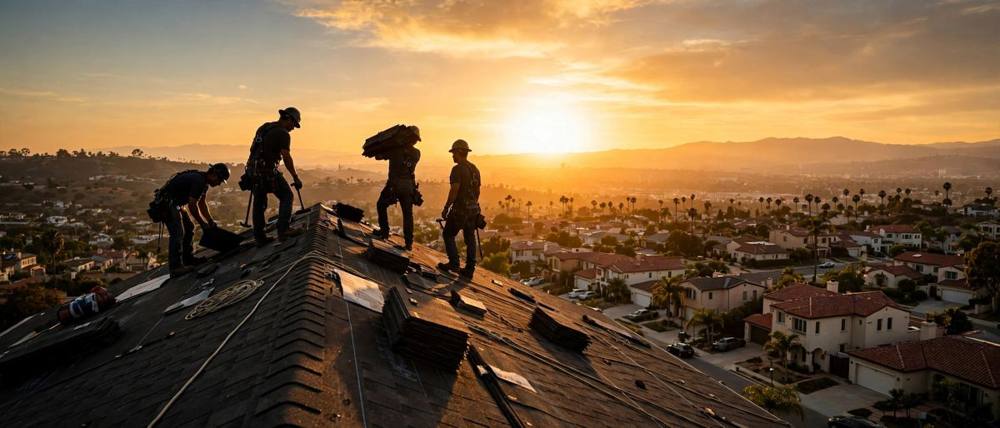
Full roof replacement plus seamless gutters; praised a detailed consultation, the company's own trained crew rather than subcontractors, daily project-manager presence, daily cleanup, and passing inspection.
First full roof replacement and new gutters; praised a step-by-step explanation and patience with insurance and financing questions, and clear communication.
Full roof replacement, gutters, gutter guard, and siding work in the reviewer's own account; praised colour renderings, scheduling, organisation, and communication, and options suited to Gardena sun and seasonal rain.
Leak leading to full replacement; praised a fast estimate and inspection, fair repair-versus-replacement advice, a 2-day install, and rooftop photos.
Reroof after poor workmanship and leaks on a new-home build; praised a thorough explanation, insurance-claim help, careful work on a steep roof with a special panel system, and cleanup.
Aggregate only for the other 37 reviews: 4.9 stars across 42 reviews in total (36 five-star, 6 four-star, 0 lower). Reviewers described pricing as fair; no dollar figure is claimed from reviews.
The cluster's seasons are Gardena's seasons, with one addition: public-programme calendars.
After winter rain, inspect civic drains and house flashing alike, before summer heat hardens sealants.
UV and heat age flat-roof membranes and sealants on large spans first.
Clear civic drains and house gutters before November–March rain; reseal parapets and penetrations.
Concentrated rain tests civic drainage and older-house flashing at the same time.
Gardena Civic Center — 162nd Street Cluster is the focus here, but the surrounding Gardena areas below share crews and standards. Only kept Gardena location pages are linked.
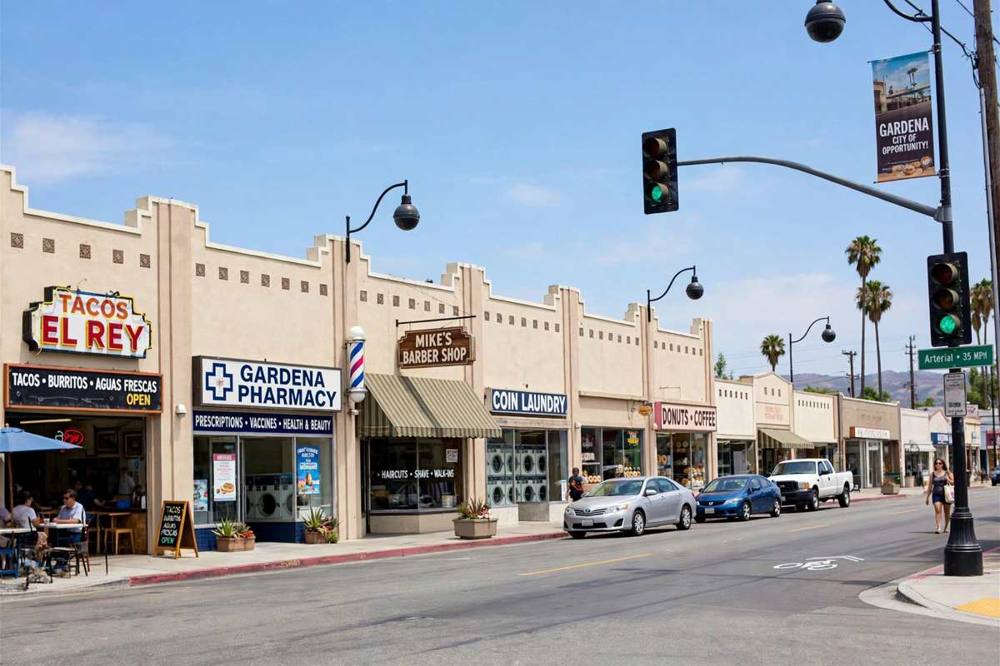
The downtown corridor page covering this same ground from the shopfront side — overlap stated on both pages.
Local coverage and details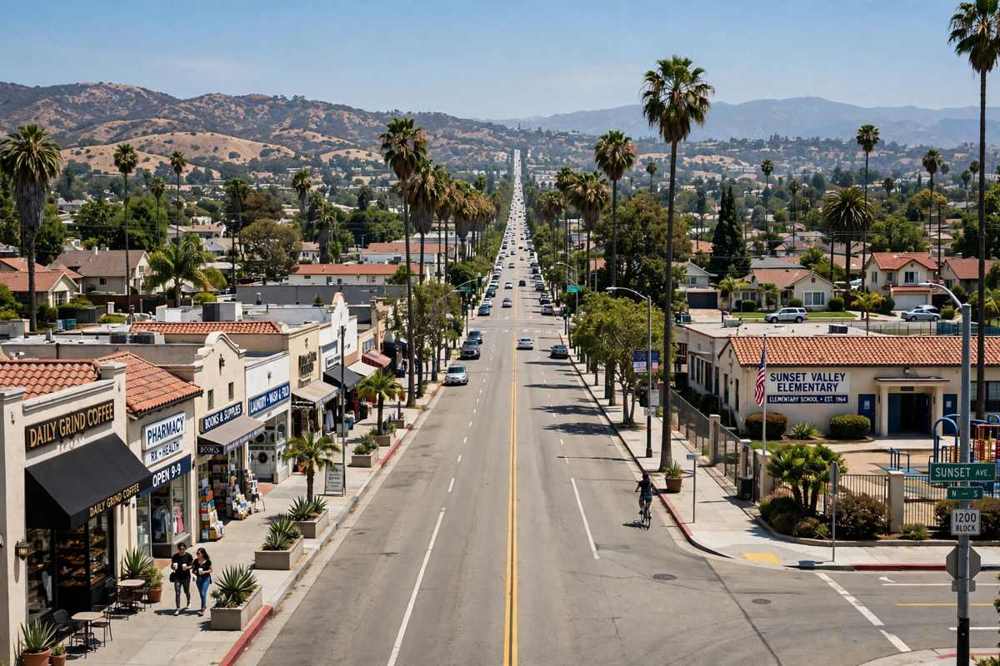
The north-south arterial touching the central civic zone on its way the full length of the city.
Local coverage and details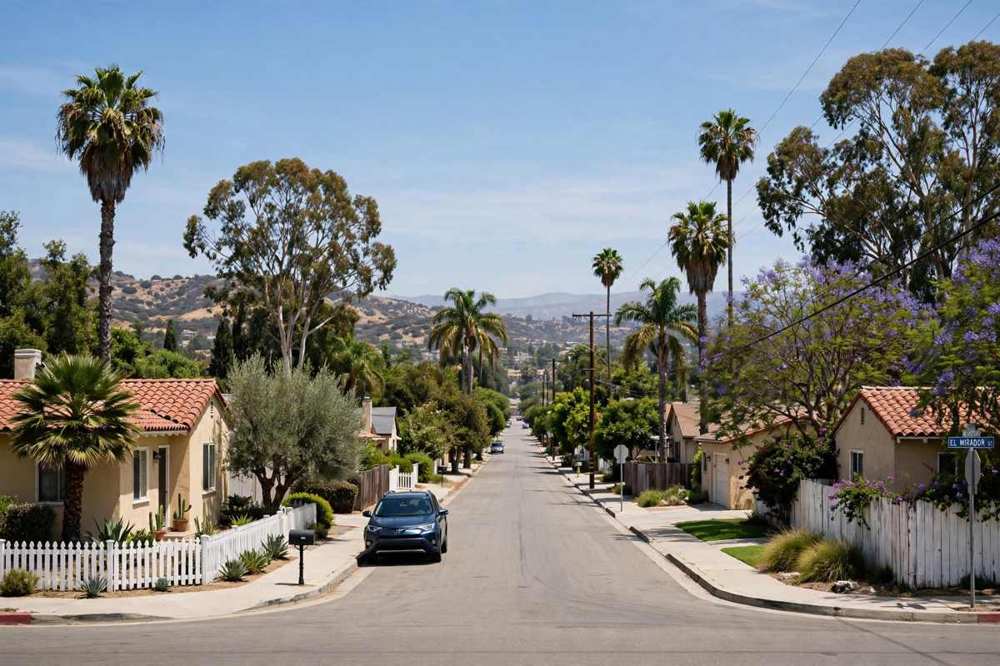
The second north-south arterial, crossing Gardena Boulevard near the corridor's mixed-use corner.
Local coverage and details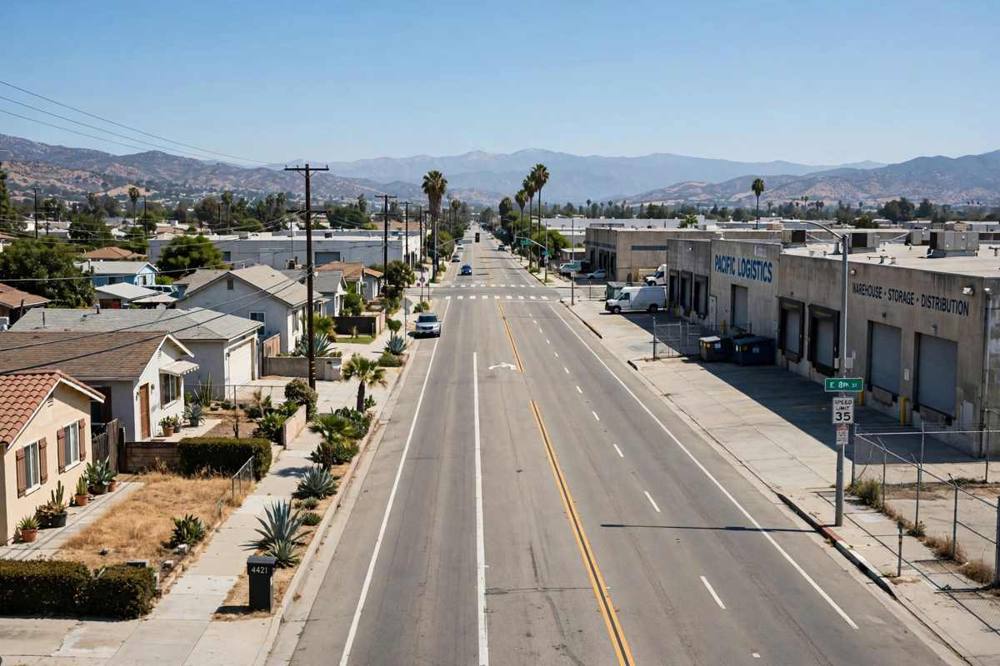
The directional area to the north, with its own industrial-residential seam.
Local coverage and detailsAsk any contractor these questions before work starts on a civic-cluster or surrounding-house roof, including us.
C-39 is California's roofing classification (CCR Title 16 §832.39). No licence number is claimed on this page; check any contractor on the CSLB "Check a License" tool before hiring.
Permits for a Gardena reroof go through the City of Gardena Building & Safety Division at City Hall, 1700 W. 162nd St. (City counter phone (310) 217-9530). Fees are valuation-based under the 1 July 2026 schedule — there is no flat residential reroof fee — and completed CF1R forms are required for a reroof permit. Check the current schedule and counter for the job's total.
The scope, the covering and underlayment, flashing and drainage work, permit handling, and what happens if deck damage is found once the old covering is off. Call for an estimate; no price is promised on this page.
A local failure with sound surrounding covering usually favours repair; widespread covering failure, repeated leaks at different points, or deck damage usually favours replacement. An inspection with photos is the honest way to tell.
Gardena design criteria in Form BLD-020 (rev. 12/2/25): Climate Zone 8, design wind 100 mph Exposure C, Seismic Design Category D. Those are code design criteria, not weather observations. The baseline in Gardena's 2022-cycle amendments is minimum Class B generally, and Class A-or-B for residential roofs; check your parcel's fire-severity-zone status in the CAL FIRE/OSFM FHSZ Viewer for the parcel.
C-39 is California's roofing classification (CCR Title 16 §832.39). No licence number is claimed here; verify any contractor through CSLB "Check a License".
Reroof permits go through City of Gardena Building & Safety, 1700 W. 162nd St. City counter phone (310) 217-9530. Fees are valuation-based under the 1 July 2026 schedule; CF1R forms are required.
Gardena design criteria in Form BLD-020 (rev. 12/2/25), stated as code criteria, not weather observations. Seismic Design Category D applies without a soils report.
About 13–14 inches a year, mostly November–March, with near-zero rain June–September. Winter is when small flashing and drainage failures show up as leaks.
Long dry summers age sealants and shingle surfaces. Ventilation and reflective choices matter more here than in a cooler coastal zone.
Offshore wind season runs through autumn and winter. Edge metal, ridge and flashing details are checked with that season in mind.
No parcel fire-severity claim is made on this page. Check the CAL FIRE/OSFM FHSZ Viewer for the parcel before choosing a covering class.
Aggregate rating only: 4.9 stars across 42 reviews (36 five-star, 6 four-star, 0 lower). Review summaries on this page are paraphrases, not copied review text.
Call +1 (562) 600-4041. Open 24 hours every day. No email or form contact is offered on this page.
Permits for a Gardena reroof go through the City of Gardena Building & Safety Division at City Hall, 1700 W. 162nd St. (City counter phone (310) 217-9530). Fees are valuation-based under the 1 July 2026 schedule — there is no flat residential reroof fee — and completed CF1R forms are required for a reroof permit. Check the current schedule and counter for the job's total.
No — not as a City ward. This page covers the cluster and says plainly that it overlaps the Gardena Boulevard corridor page.
Gardena design criteria in Form BLD-020 (rev. 12/2/25): Climate Zone 8, design wind 100 mph Exposure C, Seismic Design Category D. Those are code design criteria, not weather observations. Gardena gets about 13–14 inches of rain a year, concentrated November–March with near-zero rain June–September, plus a Santa Ana wind season and UV/heat ageing of exposed materials. The baseline in Gardena's 2022-cycle amendments is minimum Class B generally, and Class A-or-B for residential roofs; check your parcel's fire-severity-zone status in the CAL FIRE/OSFM FHSZ Viewer for the parcel.
Market data only, not this business's price: Angi Los Angeles, updated 31 July 2026, gives an average replacement of $17,271, most projects $10,256–$24,963, average $8.60/sq ft ($860/square; 1 square = 100 sq ft of roof surface, not living area). Call for an estimate for a specific roof.
Nexo Xpert Roofing is open 24 hours every day (Mon–Sun). For an emergency, call +1 (562) 600-4041. No arrival window in minutes is promised. The business address is 1247 W 130th St, Gardena, CA 90247.
Not seeing your question? Our local team can help you understand urgency, scheduling and what to expect.
Ask the local teamCall us at +1 (562) 600-4041. We are open 24 hours every day. Tell us what the roof is doing and we will tell you what it needs, and arrange a time to look at it.